Port of Duqm
Why Duqm
On the route. Outside the strait.
Positioned on the open Arabian Sea, outside the Strait of Hormuz.
- OpenArabian Sea
- 18 mDraft
- East–WestPosition
Strategic location
The geography is the advantage.
Positioned on the open Arabian Sea, Port of Duqm operates outside the Strait of Hormuz — a critical advantage for shipping reliability and schedule certainty.
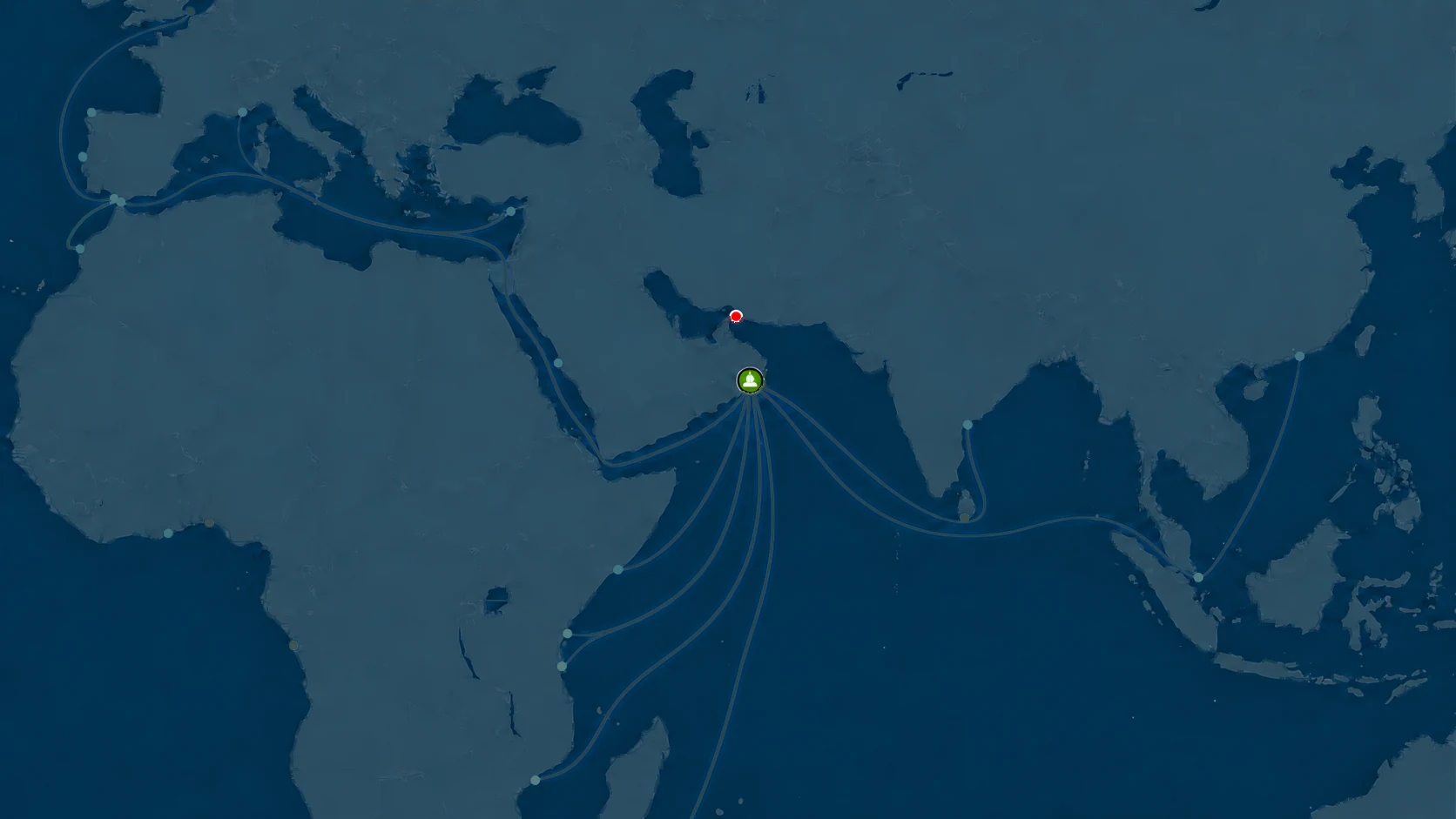
Direct route via Duqm
On the route.
Duqm sits directly on the Arabian Sea shipping route, on the open sea. No chokepoint transit is needed to reach the berth, so a Duqm call adds no diversion days.
Fujairah deviation
The northward deviation.
Bunkering at Fujairah requires a northward deviation up the Gulf of Oman, toward the Strait of Hormuz, and back to the route: two days in the illustrative model, before queue and bunkering time.
Port of Duqm
Built for deep-sea trade.
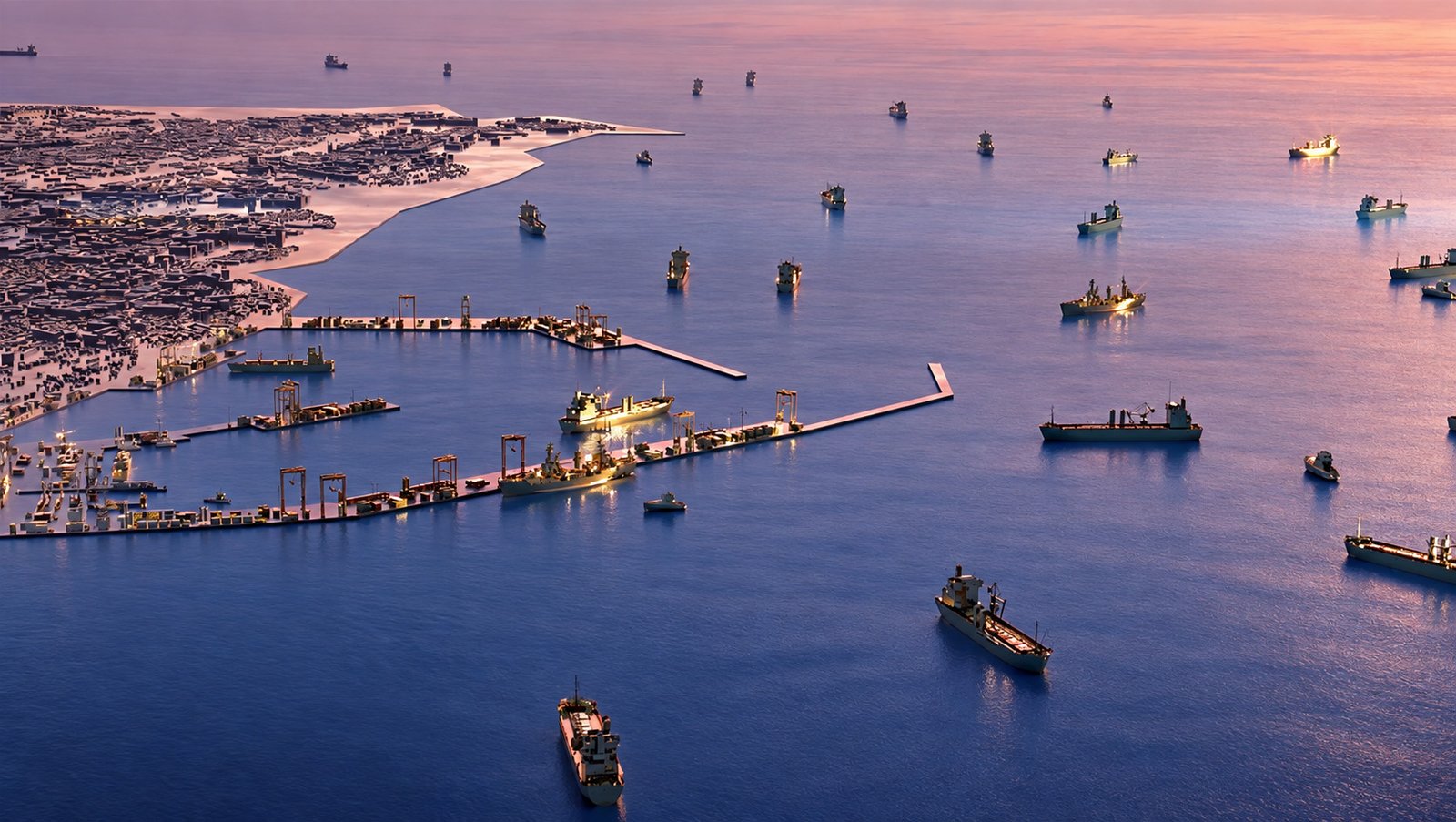
- 18 mDraftDeep-sea multipurpose port
- Open seaArabian SeaOutside the Strait of Hormuz
- East ↔ WestTrade positionConnecting East and West on major trade routes
- Proximity to key shipping lanes
- Doorstep to major Asian and European markets
- No chokepoint transit to reach the port
Illustrative diversion model
The diversion is the cost.
Follow the calculation the way a voyage accrues it — day by day, then per tonne.
Duqm calls involve no Strait of Hormuz transit, so no diversion days enter the model.
Diverting to Fujairah adds 2 days of deviation and 1 day of queue and bunkering time in the model — 3 days in all, at the stated vessel and fuel costs.
- USD 45K/dayAverage vessel daily cost
- USD 16K/dayIllustrative fuel cost30 MT/day × $550/MT
- 2 daysDuqm → Fujairah deviation
- 1 dayQueue and bunkering time
Illustrative commercial model based on stated assumptions. Actual savings vary by vessel, stem size, prevailing fuel prices, operating cost and port conditions. Not a guarantee of savings.
Model basis: June 2025.
Why Duqm
Four reasons the route ends here.
On the route.
On the open Arabian Sea — on-route for East/West trades without deviation.
Outside Hormuz.
Outside the Strait of Hormuz, on the open Arabian Sea. No chokepoint transit to reach the berth.
Built for deep-sea operations.
A deep-sea multipurpose port with an 18 m draft. 24/7 operations at the terminal, minimal waiting time, and ISO-compliant supply with independent testing and certification on every stem.
More than bunkering.
Transparent supporting services — crew change, chandlery, spares, fresh water and MARPOL waste management — at competitive supply across low sulphur and distillate grades.
Marine facilities
One port call. More capability.
Port of Duqm ensures safe and efficient marine traffic, providing a comprehensive range of services — directly or through licensed agents and sub-contractors.
- Pilotage
- Tug-Boats
- Ship-to-Ship
- Bunkering
- Offshore Rigs
- Crew Change
- Mooring
- Fresh Water
- Waste Collection
- Dry Dock
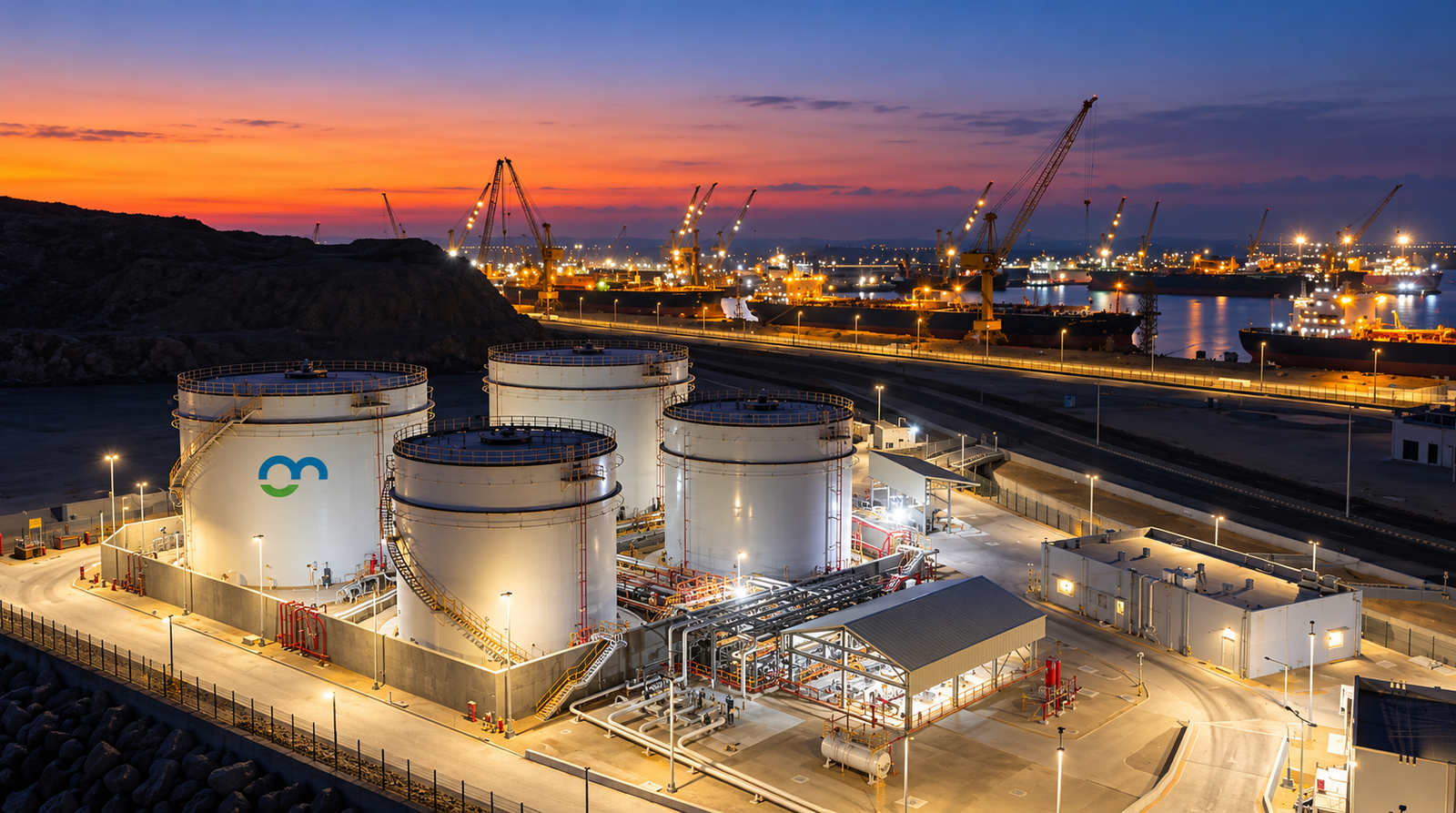
Duqm Bunker Terminal
The strategic location is only part of the story.
The infrastructure is already here.
A fully commissioned greenfield bunker terminal at Port of Duqm — 30,000 m³ across four tanks, with barge, road tanker and ex-pipe delivery.